Guides · 5 min read
Strangers-to-lovers audio stories: one night, one stranger, your choice
Two people who have never met, one night that throws them together, and the moment it stops being a coincidence. The trope that fits a short story best.
Strangers-to-lovers audio stories are short stories where you and someone you have never met are thrown together for one night, and you decide how close you get. Start with Last Train: your train home stops in the rain and the man across the aisle offers you his jacket. It is free in full, about seven minutes, and plays in your browser.
What strangers-to-lovers means
It is one of the oldest shapes in storytelling. Two people who have never met end up in the same small place: stuck, delayed, sheltering from something. They start polite, because strangers are polite. Then the situation lasts a little longer than it should, someone says something true, and the politeness slips. The pleasure of the trope is that slip: the moment a stranger becomes someone in particular.
Unlike friends-to-lovers, there is no history to overcome, and unlike enemies-to-lovers, there is no grudge. There is only the night, and the question of what you will do with it. That makes it light, hopeful and very easy to step into, because you do not need any backstory. You only need to be there.
Why it is perfect for short audio
Strangers-to-lovers fits a short story better than almost any other trope. The whole arc can happen in one evening, in one place, in real time. A seven-minute train delay is a seven-minute story. You do not need chapters of setup, because a stranger arrives with none.
It also suits a single voice talking to you. You meet him the way you would meet anyone: you hear him before you know him. The first lines are careful, a little formal. Over the next few minutes you notice his voice changing: warmer, slower, more himself. Audio is very good at that change. You can hear someone stop performing politeness, and it is one of the most quietly thrilling things a voice can do.
The settings that make it work
- Somewhere you are both stuck. A stopped train, a ferry crossing, a dead key card, a building that loses power. Nobody can leave, so nobody has to explain staying.
- A clock. The train will move, the ferry will dock, the lights will come back. Knowing the night ends gives every minute a little weight.
- A small kindness. A jacket, a candle, a cup of tea from a tiny hotel kettle. Strangers become someone through what they do before what they say.
- One honest moment. A confession you would only make to someone you will never see again, which is exactly why you make it.
- A choice at the end. Do you swap numbers, knock on his door tomorrow, stay on deck until sunrise? The best versions leave it to you.
Stories to start with
 FreeLast TrainComfort · 5 min
 Moonvale+Night CrossingComfort · 5–6 min
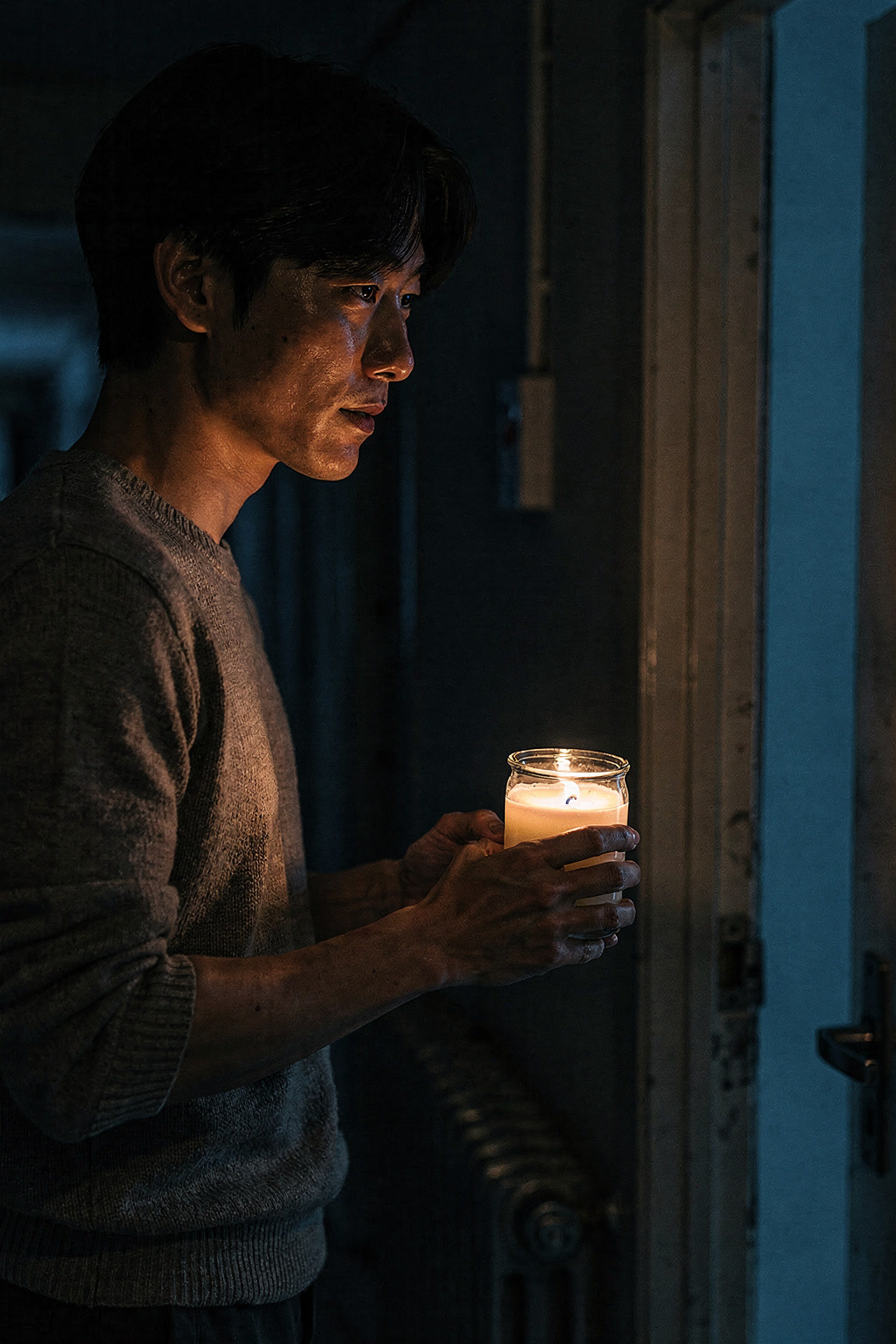 Moonvale+Lights OutComfort · 6 min
 Moonvale+Room 412Strangers · 7–8 min
Last Train. You both made the last train home, then it stopped in the rain. He is tired, a little teasing, and more concerned than he lets on that you are cold. At one point he gives you the code to his building door and asks you to remember it; later, it matters. Free in full.
Night Crossing. An overnight ferry, a one-way ticket, and a stranger on the deck who will not let you be alone with it. This is the most emotional of the stranger stories: you are leaving something behind, and he notices before you say a word. Sea wind, engine hum and a long dark crossing.
Lights Out. The whole building goes dark, and the neighbour you have only ever nodded at is knocking on your door with a candle. You have shared a staircase for a year and never had a conversation. Tonight, with no lights and nothing to do, you have nothing but conversation. Cosy, funny and very warm.
Room 412. Your hotel key card is dead, reception is not answering, and the stranger next door has a tiny kettle, an unwritten best man speech and no idea how to stop smiling at you. The lightest and most flirtatious of the four: a corridor, a borrowed room and a speech that needs help.
If you want a stranger with a little more mystery, Open All Night is set in a laundromat during a thunderstorm at two in the morning, and the only other person awake is someone you have never seen before.
Why you answer him
In a book you watch two strangers find each other. In a Moonvale story you are one of them. At a few moments he stops and asks you something: whether you want his jacket, how tired you are, whether you will help with the speech. You answer with a tap, a slider or, sometimes, a code he told you earlier. The story follows your answer, and the ending depends on what you chose. Each story has two to four endings.
That changes the trope in a lovely way. The whole point of strangers-to-lovers is the choice to let someone in. Here the choice is actually yours. You can stay guarded and have a sweet, polite evening. You can be open and hear a very different version of the same night. Listening twice, answering differently, is part of the fun.
Strangers-to-lovers versus other tropes
- Strangers to lovers: no history, one night, light and hopeful. Best when you want something easy to step into.
- Friends to lovers: years of history and the risk of losing a friendship. Slower, warmer, more nervous.
- Enemies to lovers: a grudge or a war between you. Sharper, more tension, more banter.
- Forced proximity: the setting rather than the relationship. Most stranger stories use it, which is why they are so often set on trains and in blackouts.
If you are new to audio stories, strangers-to-lovers is the easiest place to start. You do not need to like a character before you begin, because neither of you knows the other yet. You get to decide as you go.
Good for bedtime too
Three of the four stories above are among the gentlest in the library. A stopped train, a dark building and a ferry at night are all quiet places, and the voices stay low. If you listen in bed and leave a question unanswered, he waits a moment and goes on, so you can drift off without touching your phone. For the sleepiest picks, see audio to fall asleep to, like he is right next to you.
About Moonvale
Moonvale makes short interactive audio stories for adults, 18 and over. They are intimate and sometimes flirtatious, never explicit, written by people and told in one voice. Every opening plays free in the browser without an account, and two stories, Last Train and The Keeper, are free in full. A subscription opens the rest of the library.
Why a stranger, and not someone you know
There is a reason this trope has lasted. A stranger has no expectations of you. You can be whoever you are tonight, without the version of yourself your friends know or your family remembers. Many people find it easier to be honest with someone they will never see again, and stories about strangers let you feel that freedom from a safe distance. The night ends, the train moves, the lights come back on. What you said in the dark was real anyway.
Questions
What is a strangers-to-lovers story?
A story where two people who have never met are thrown together, usually for one night in one place, and grow close. The pleasure is the moment a stranger becomes someone in particular.
Which strangers-to-lovers audio story should I start with?
Last Train, where your train home stops in the rain and a stranger gives you his jacket. It is free in full on Moonvale, about seven minutes.
How is it different from friends-to-lovers?
There is no shared history. Friends-to-lovers is about risking a friendship; strangers-to-lovers is about letting someone new in over a single night.
Are the stories explicit?
No. They are for adults (18+), intimate and sometimes flirtatious, and never explicit.
Do my answers change the story?
Yes. At a few moments he asks you something, and your answer changes what happens next and which ending you reach. Each story has two to four endings.
Is it free?
Every opening is free in the browser without an account, and two stories, Last Train and The Keeper, are free in full.