Guides · 5 min read
Roommate and neighbour audio stories: forced proximity, out loud
Thin walls, shared kitchens, one blackout. Why living close to someone is such good story fuel, and which stories have it.
Roommate and neighbour audio stories run on forced proximity: you cannot avoid each other, so something has to give. We do not have a roommate story yet; the closest are Lights Out, where the neighbour from across the hall knocks during a blackout, and Snowed In, a cabin with your best friend. Both openings are free.
Why forced proximity works so well
Most stories have to invent reasons for two people to keep running into each other. Forced proximity skips that step. A shared flat, a thin wall, a lift you both use every morning: the situation does the work. The tension builds from small, ordinary things, like whose turn it is to buy milk, music through the wall at midnight, or the way he always seems to be in the kitchen when you are.
It is also the most relatable kind of setting. Not everyone has met a fae lord. Almost everyone has had a neighbour they wondered about, or a flatmate who became something more complicated. That familiarity is why these stories feel so close, and why they work so well told directly to you.
What the trope needs
- A space you share. A hallway, a kitchen, a building. The closer and more everyday, the better.
- An event that breaks the routine. A power cut, a storm, a lockout, a party next door. Neighbours can nod at each other for years until something forces a conversation.
- A reason to hold back. A lease, a friendship, an ex, the fear of making the stairwell awkward forever.
- Small kindnesses. A candle at your door, a borrowed charger, a note under the door. Proximity stories are built out of them.
Stories with that feeling
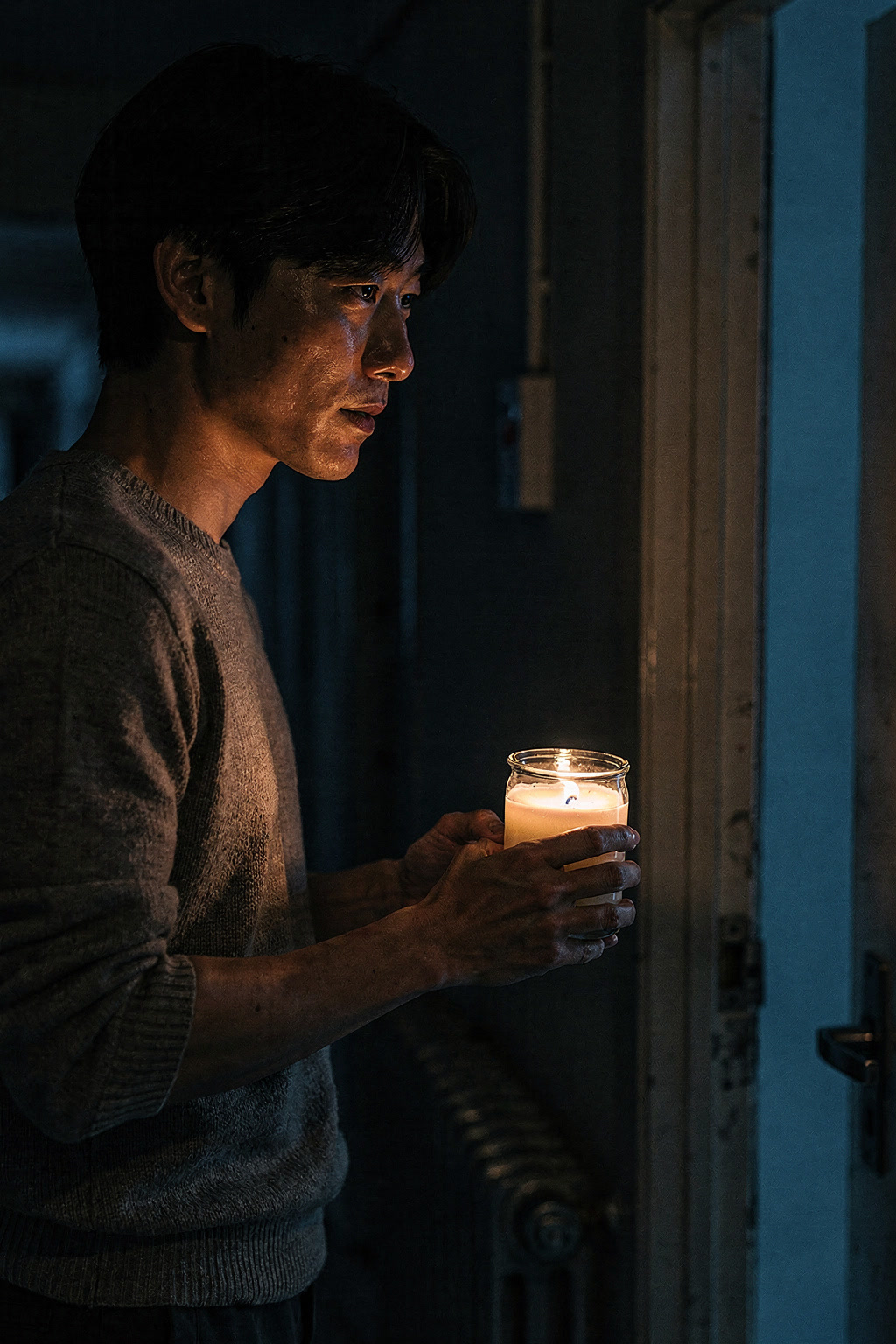 Moonvale+Lights OutComfort · 6 min
 Moonvale+Snowed InFriends to lovers · 6 min
 Moonvale+Room 412Strangers · 7–8 min
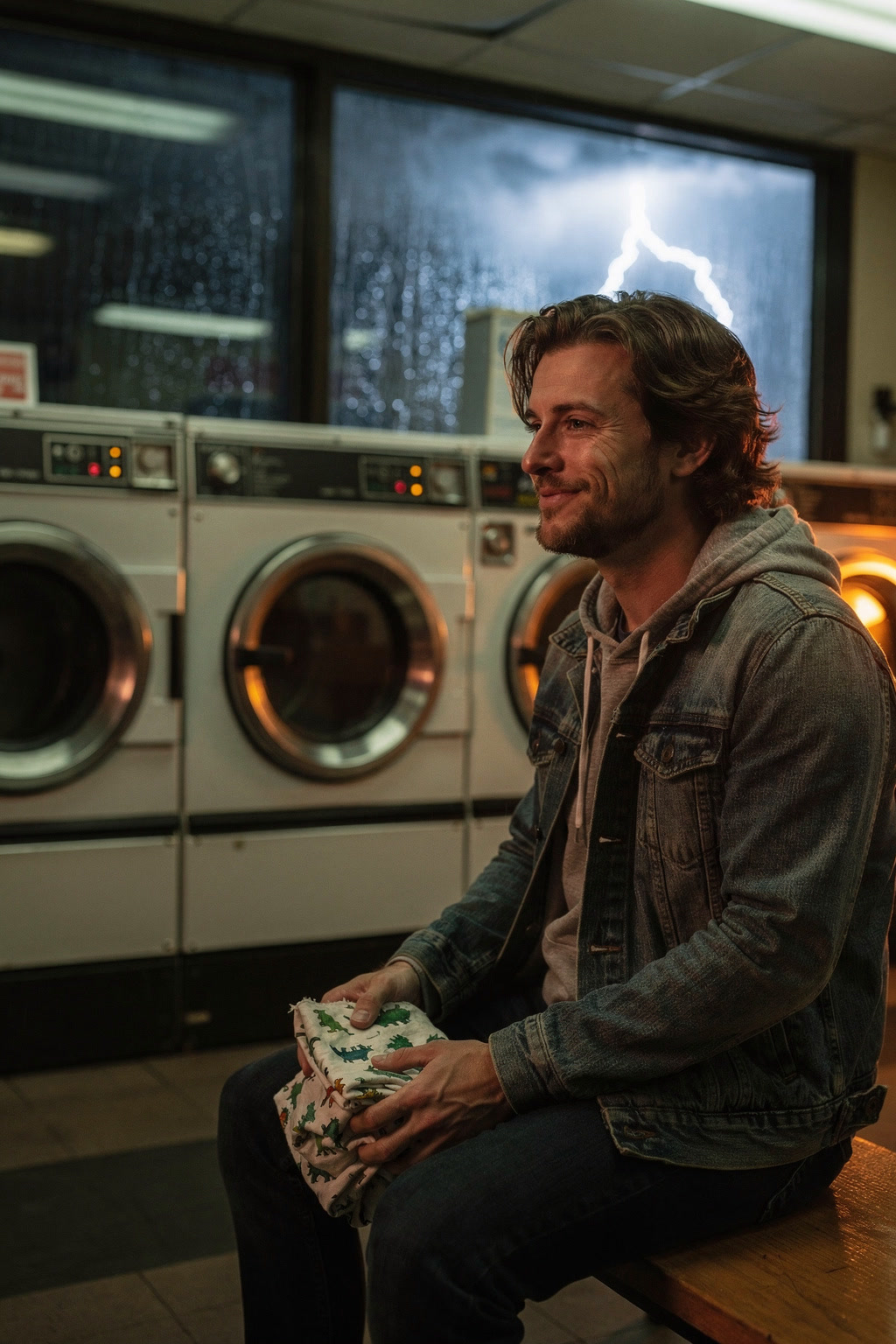 Moonvale+Open All NightComfort · 5 min
Lights Out. A winter power cut takes out the whole building, and the man from across the hall, the one you have nodded at in the lift for a year, knocks on your door with a candle. He has a camping stove, far too much pasta, and the code to the roof. This is the most neighbourly story we have: the building, the dark, the slow realisation that he has been noticing you too.
Snowed In. The ski trip was supposed to be eight friends in a cabin. Then the roads closed, and now it is just you and your best friend of eight years. Proximity plus history: you know each other too well for small talk, and there is nowhere to go.
Room 412. Your hotel key card has died, and the man trying his own door next to yours is in four-twelve. You are in four-twenty-one. It is the neighbour trope compressed into one rainy night: one drink, strictly as neighbours, and the question of which door you knock on at the end.
Open All Night. A 24-hour laundromat in a thunderstorm and the only other person awake at two in the morning. Not neighbours, but the same shape: two strangers in a small space, and the lights about to go out.
Why we do not have a roommate story yet
We are honest about this because it is one of the most requested scenarios. A good roommate story needs time: the slow build of living together, the running jokes, the day it changes. That is a longer arc than our usual one-night stories, and we would rather wait than squeeze it. It is on our list, together with a grumpy neighbour, and we will add it here when it is out.
The small moments that make it
- The first real conversation. After a year of nods in the lift, the first time he says more than good morning is an event.
- Seeing his space. A neighbour's flat, a friend's cabin, a stranger's hotel room: what is on the shelves tells you who he is.
- The borrowed thing. A candle, a jacket, a charger. Something of his that ends up with you, and a reason to give it back.
- The almost. A hand on the doorframe, a goodnight that takes too long, the decision about whether to knock.
Proximity stories are built from exactly these beats, and they are what audio carries best. You do not need a plot twist when you can hear him hesitate at your door. In Lights Out, the whole story turns on small things: whether you let him in, how close you sit by the camping stove, whether you remember the code to the roof. By the end, the building that was full of strangers has one person in it you know.
How you take part
Each story is one voice talking to you, about five to nine minutes. At a few moments he asks you something and waits: a reply to tap, a slider for how close you sit, a code he told you earlier. In Lights Out it is the code to the roof; in Room 412 it is his room number, if you remember it. Your answers change what he says and which ending you reach.
Listening tips
- Headphones, low volume, lights down. The stories are recorded close, and the room sound (a candle, rain, a dryer) sits quietly underneath.
- Go back for the other endings. Proximity stories reward a second listen: you notice what he was saying all along.
- If you like the slow burn, read friends-to-lovers audio stories next.
Grumpy neighbour, sunshine neighbour
A popular twist on the trope pairs a grumpy, private neighbour with a warm, chatty one. One of them complains about the noise; the other brings soup. Over time the grumpy one turns out to be the most attentive person in the building. We are planning a story in that shape, a grumpy athlete next door, and it will sit alongside Lights Out when it is out.
Until then, Lights Out has the quieter version of the same pleasure: a man who has clearly been noticing you for a year and never said a word, and who turns out to be kinder than his nod in the lift suggested.
And if you are reading this because you share a flat with someone you think about too much: the stories will not tell you what to do, but they might make the hallway feel a little less awkward for a few minutes.
Is it explicit?
No. Moonvale is for adults (18+), and the stories are warm, flirtatious, sometimes flustered, never explicit. Forced proximity is a trope about almost: the door that stays open a moment too long, the sentence neither of you finishes.
Start with Lights Out. The opening is free in the browser, no account needed.
Questions
What are forced-proximity audio stories?
Stories where two people are stuck close together, sharing a flat, a building, a cabin or one night, and cannot avoid what is between them. In Moonvale he talks to you directly and you choose how to answer.
Does Moonvale have a roommate story?
Not yet; it is planned. Lights Out (a neighbour in a blackout) and Snowed In (a cabin with your best friend) have the same forced-proximity feeling.
Which story should I start with?
Lights Out for the neighbour feeling, Snowed In for friends-to-more. Both openings are free.
Is it explicit?
No. Moonvale is for adults (18+), warm and flirtatious, never explicit.