Guides · 5 min read
Sick-day comfort audio: when you want someone to look after you
For days spent under a blanket. A voice that worries about whether you are warm enough, and stories that ask nothing of you.
On a sick day, comfort audio works best when the voice is doing the looking after: noticing you are cold, telling you to sit by the fire, not needing anything back. Start with The Keeper, where a lighthouse keeper warms you up after a storm, or Last Train, where a stranger gives you his jacket. Both are free in full.
One honest note: we do not have a story set on a sick day yet. It is one of the most requested scenarios in comfort audio, and it is on our list. Until then, the stories below have the same heart: someone who notices you are not well and quietly takes care of it.
Why sick-day audio is so popular
Being ill is lonely in a specific way. You are too tired to read, too foggy for a film with a plot, and there is often nobody around to bring you anything. Comfort audio fills exactly that gap. You lie still, close your eyes, and someone kind talks to you. It asks nothing; it just stays.
The scenarios people return to are remarkably consistent. He notices before you say anything. He gets you a blanket, or his jacket, or a hot drink. He tells you off a little for not looking after yourself. He stays. If you have ever wanted someone to fuss over you when you feel awful, you know why these are some of the most-played comfort recordings anywhere.
It also helps that audio asks so little of your body. You do not need to hold anything, focus your eyes or sit up. You can listen lying on your side with the duvet over your ear, drift off halfway through, and pick it up again when you wake. On a day when even scrolling feels like effort, that matters more than any feature.
What to look for on a sick day
- Care, not drama. A story where the main event is being warmed up, fed or tucked in.
- A quiet, close voice. Your head may hurt; nothing should be loud or sudden.
- Short stories you can replay. Ill days are long. A seven-minute story you can loop is better than an hour you have to concentrate on.
- No effort required. You should be able to listen with your eyes closed and never touch the screen.
Stories with a looking-after heart
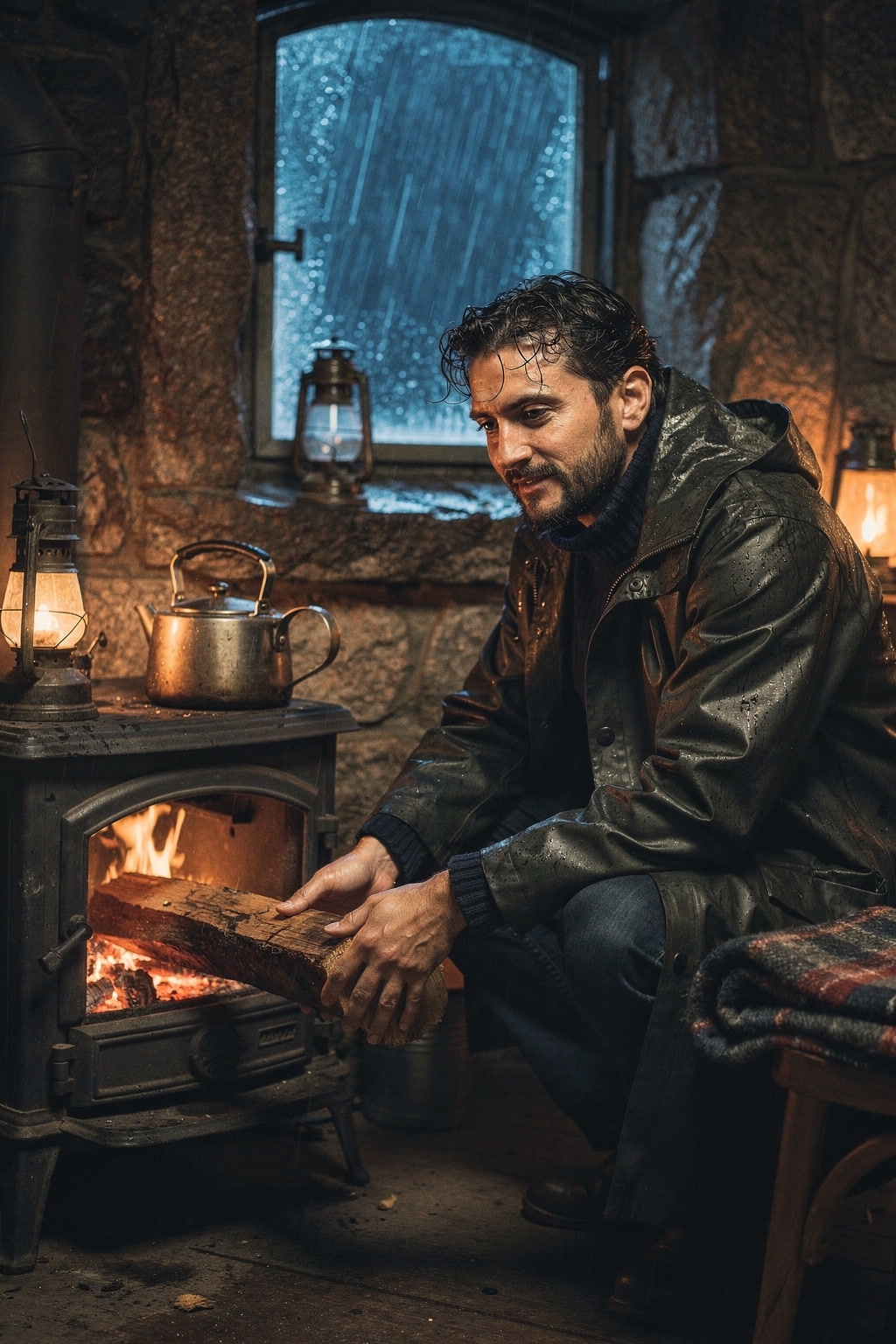 FreeThe KeeperFantasy · 7–8 min
 FreeLast TrainComfort · 5 min
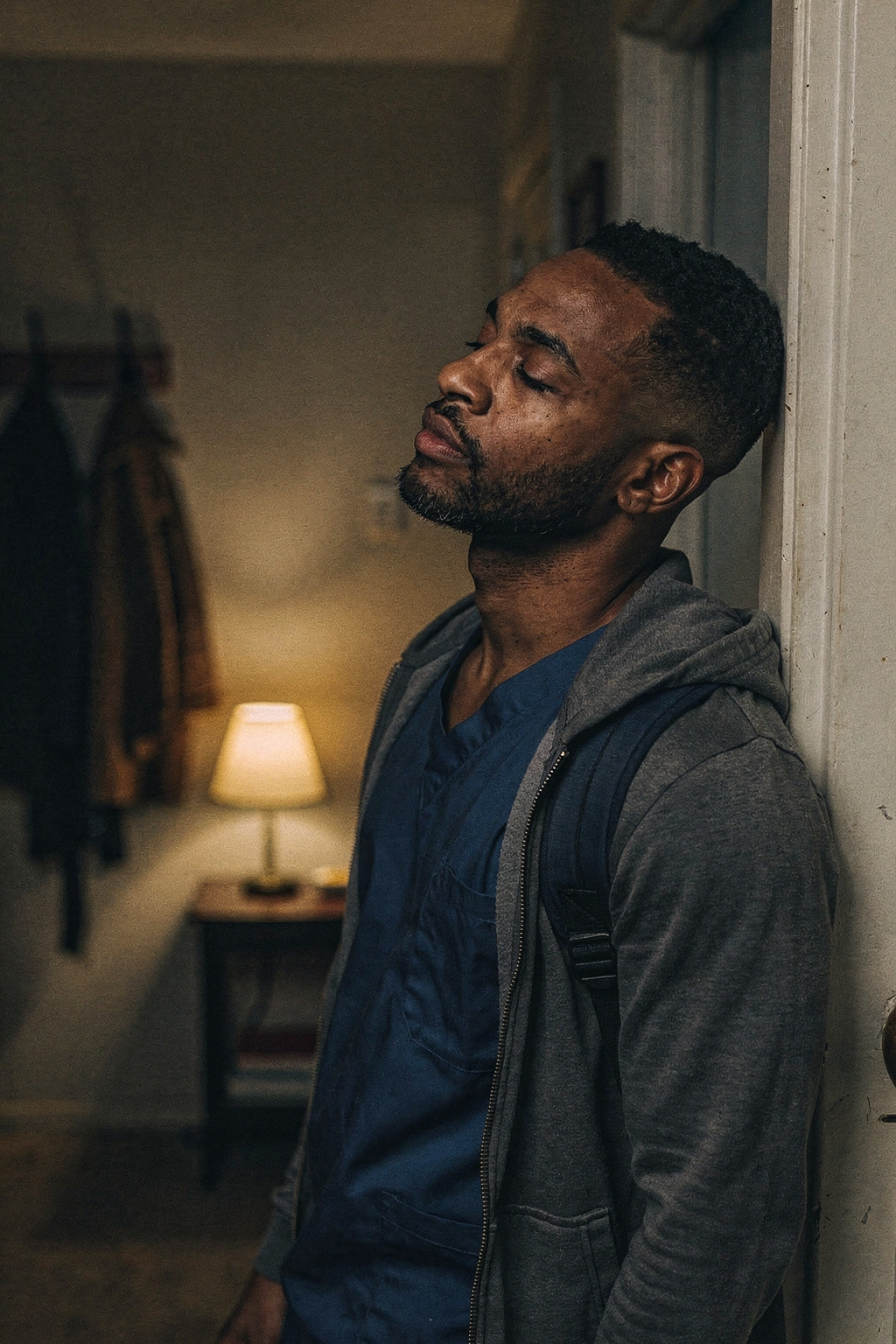 Moonvale+Night ShiftJealous · 6–7 min
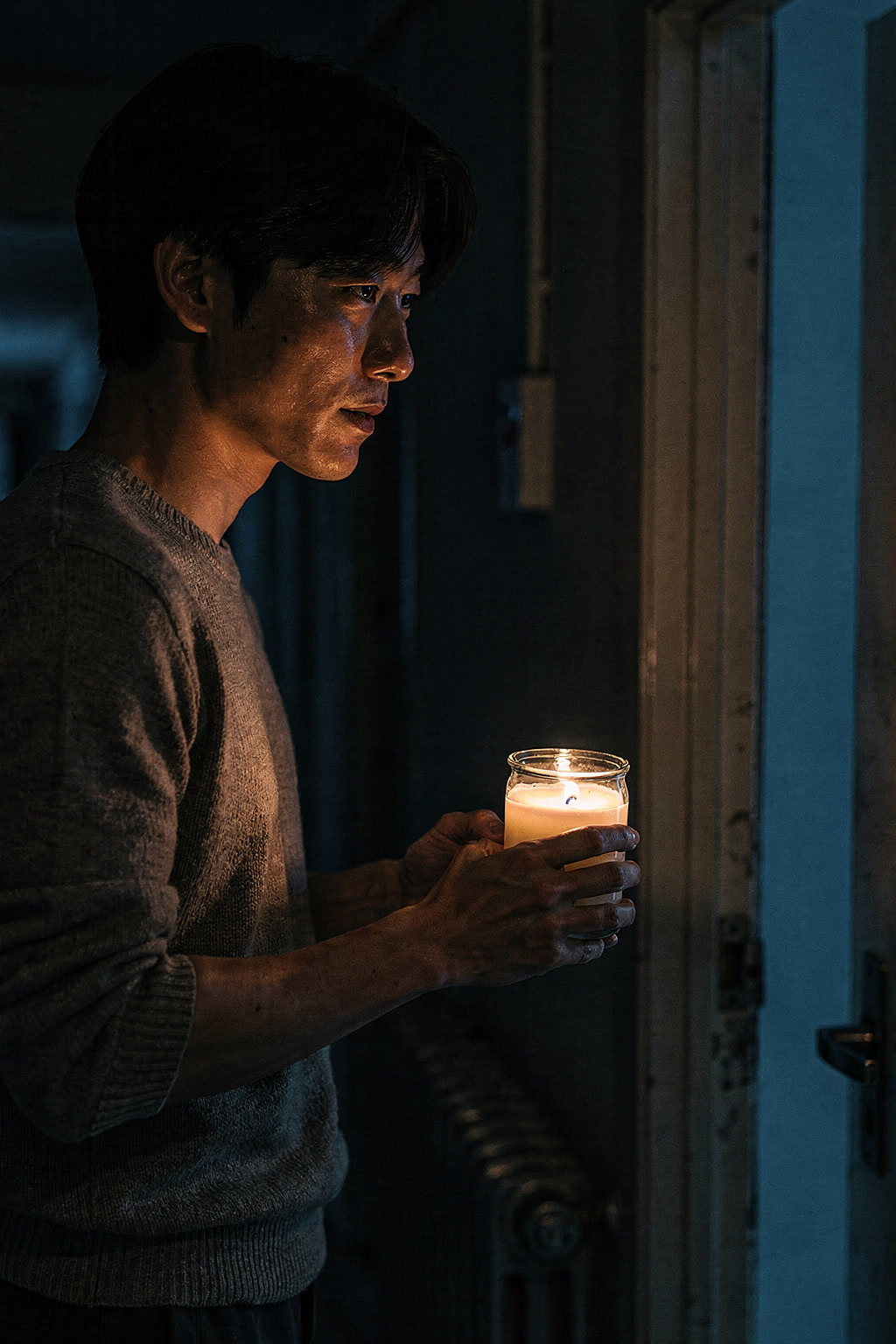 Moonvale+Lights OutComfort · 6 min
The Keeper. The storm leaves you on the rocks with blue lips. The keeper carries you up to his fire, wraps you in whatever he has, and talks the whole time to keep you awake and warm. It is the closest thing in the library to a sick-day story: someone tending you back to comfortable.
Last Train. You are cold on a stopped train, and he notices before you do. The jacket comes off his shoulders and onto yours. He keeps checking that you are all right. Gentle, slow, and perfect for listening under a blanket.
Night Shift. The roles reversed: he is the doctor, home at four in the morning after fourteen hours, and you are the one doing the looking after. If what you miss is the domestic feeling of being with someone, this is the most lived-in story we have.
Lights Out. A power cut, a dark flat, and the neighbour from across the hall at your door with a candle and a camping stove, asking if you are all right. He ends up making you dinner. Simple, warm, unhurried.
Why being looked after feels so good in audio
There is a reason the most-played comfort recordings are so simple. When you are ill, your world shrinks to a bed and a blanket, and what you want is not entertainment but attention. A voice that notices you are pale, asks whether you have eaten, and tells you to stay where you are gives you exactly that, without anyone having to see you at your worst.
Audio is also the only format that works when you feel truly awful. Reading makes headaches worse. Screens are too bright. A film needs you to follow it. Listening needs nothing: you can lie still with your eyes shut, and the story comes to you.
The small things that make it feel real
- Being noticed before you say anything. The keeper sees your blue lips; the stranger on the train sees you shivering.
- Being told off, gently, for not taking care of yourself. It is a kind of affection, and everyone recognises it.
- Practical care: a jacket, a fire, food, a blanket. Grand gestures matter less than warm hands.
- Staying. The heart of every sick-day scenario is that he does not leave once you are settled.
Those are the beats we will build the sick-day story around when it comes. In the meantime, they are all in The Keeper and Last Train already, which is why those two are the ones we point people to when they say they are under a blanket and feeling sorry for themselves.
How to listen when you feel awful
- Keep the volume low. Ill heads are sensitive, and quiet audio is more soothing anyway.
- Use the sleep timer if you might doze off; naps are the point.
- Do not worry about the choices. If you do not answer him, he waits, then goes on.
- Replay your favourite. On a sick day, familiar is better than new.
A sick-day playlist
If you are going to be in bed all day, it helps to have a plan you do not have to think about. Morning: Last Train, once, while the tea cools. Afternoon nap: The Keeper with the sleep timer on. Evening: Lights Out, because by then you will want company and dinner, even imaginary ones. Repeat whichever one you liked best before you sleep. None of this needs an account, and none of it needs you to sit up.
What it is and is not
These are stories, made to keep you company for a few minutes. They are not medical advice, and they are no reason to skip the doctor if you need one. Drink some water. Then put your headphones in.
Is it for adults?
Yes, Moonvale is for listeners 18 and over. The stories are warm and sometimes flirtatious, never explicit, and the ones above stay gentle throughout.
Start with The Keeper. It is free, it plays in your browser, and you can listen with your eyes closed.
Questions
What is sick-day comfort audio?
Short audio where a calm voice looks after you: notices you are cold, keeps you company, asks nothing back. People listen when they are ill and alone.
Does Moonvale have a story about being sick?
Not yet; it is planned. The Keeper and Last Train have the same looking-after feeling, and both are free in full.
Can I listen without touching my phone?
Yes. If you do not answer when he asks something, he waits a moment and then carries on.
Which story should I play when I am ill?
The Keeper, where a lighthouse keeper warms you by his fire after a storm, or Last Train, where a stranger notices you are cold and gives you his jacket. Both are free in full and gentle throughout.
Is it explicit?
No. Moonvale is for adults (18+), warm and intimate, never explicit.